Selected masterwork · 01 / 06
Diego Velázquez
1656
A princess, her attendants, a painter and a reflected royal couple occupy one of painting’s most ingenious spaces.
- Medium
- Oil on canvas
- Home
- Museo del Prado, Madrid


A Museum Without Walls
Where Beauty, Faith, Art & Civilization Endure.
“Beauty will save the world.”
Fyodor Dostoevsky · The Idiot, 1869
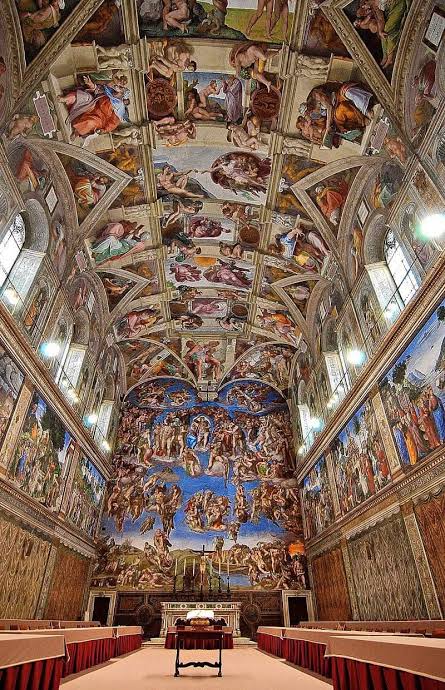
Beneath Michelangelo’s vault, painting becomes architecture and the history of creation unfolds overhead. Move through the chapel and discover its three great cycles.
From the separation of light and darkness to the creation of Adam, Michelangelo turns the ceiling into a sweeping vision of creation.
For two thousand years, Europe built its highest hopes in stone, pigment, plainchant and verse. AESTHORIUM gathers them into one luminous house — open at every hour, to everyone.
Discover the collection →
Michelangelo · c. 1512
The Creation of Adam
Not merely objects to admire, but a living inheritance to understand, question and carry forward.
Attention before consumption; wonder before noise.
The sacred imagination that shaped Europe’s deepest symbols.
The visible record of hands, minds and centuries.
An inheritance renewed each time it is understood.
From the Renaissance workshop to the Romantic concert hall, beauty passed between faith and reason, patron and artist, manuscript and machine.
1500
The human form, divine order and the rebirth of antiquity.
1600
Light enters the sanctuary; painting and music learn to move.
1700
Reason, counterpoint and the encyclopedia redraw the world.
1800
The soul, the nation and the sublime take centre stage.
1900
An old inheritance meets new forms, cities and possibilities.
From the courts of Madrid to the forests of Germany, European painters made entire worlds from light, pigment and human experience.

Spain · Spanish Baroque
Las Meninas
Selected masterwork · 01 / 06
1656
A princess, her attendants, a painter and a reflected royal couple occupy one of painting’s most ingenious spaces.
Move through eight illuminated rooms. Each stop opens a masterwork, its maker and the world that formed it.

Room 01 / 08 · High Renaissance
Michelangelo · c. 1512
God the Father reaches toward Adam across a charged gap of sky — the instant before life is given.
Fresco
Sistine Chapel, Vatican City
Europe’s greatest achievements were never separate rooms. Choose a discipline and follow the ideas moving between them.

Raphael · 1483–1520
Perspective, anatomy and theology meet on a painted surface. Raphael turns philosophy into a world of gesture, architecture and light.
Geometry gave European artists, musicians and astronomers a shared language of order. Choose a study, then turn the instrument in your hands.
Drag to orbit · Scroll or pinch to zoom
Study 01 / 03
Euclid to Leonardo
φ
From ancient geometry to Renaissance drawing, proportion offered a way to relate parts and wholes. The golden ratio became an enduring emblem of that search — fascinating, but not a universal formula for every beautiful work.
An interpretive mathematical sculpture, not a reconstruction of a historical instrument.
From the catacombs to Chartres, from Rublev's silence to Bach's Passion — the Christian imagination shaped Europe's art more than any other force. Walk the Life of Christ in painting, decode the symbols, and meet the saints.
Enter the Sacred Wing →

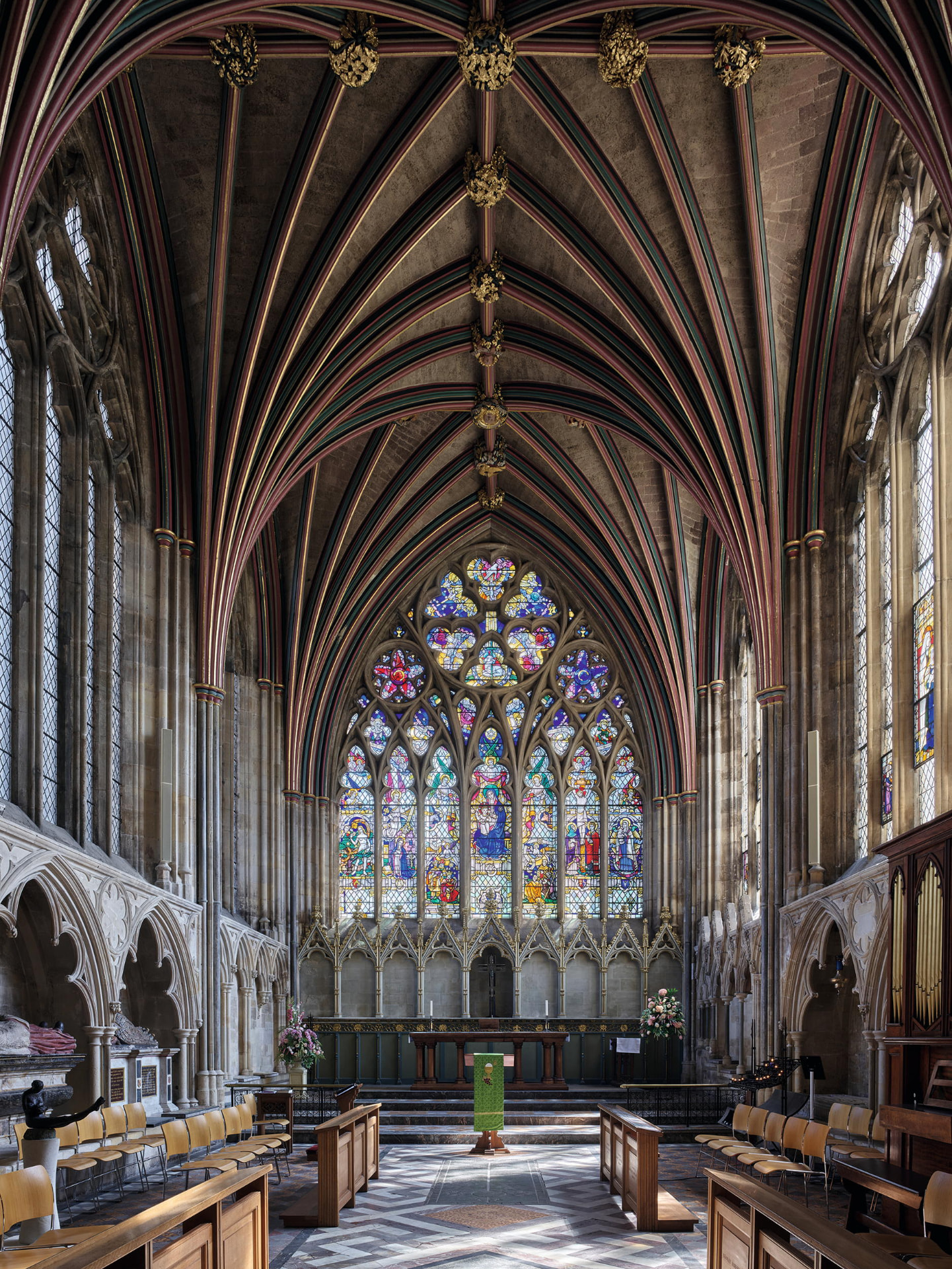
The rhythm of columns. The ascent of the vault. A place where stone gives shape to the sacred.
Explore the cathedral atlas →
Enter the literary hall →“The love that moves the sun and the other stars.”
Dante Alighieri · Paradiso, Canto XXXIII

1685–1750

1756–1791

1770–1827

1813–1901
Pythagorean tradition heard numerical ratios in a vibrating string. Choose an interval, watch its geometry change, then sound the two frequencies together.
Monochord study · A3 = 220 Hz
Perfect fifth
3:2
Three cycles answer two. This spacious interval became a foundation of sacred polyphony and Western harmony.
Masterpieces, sacred places, and stories from the AESTHORIUM Journal, delivered to your inbox.


